
Our first book club: The immortal life of Henrietta Lacks
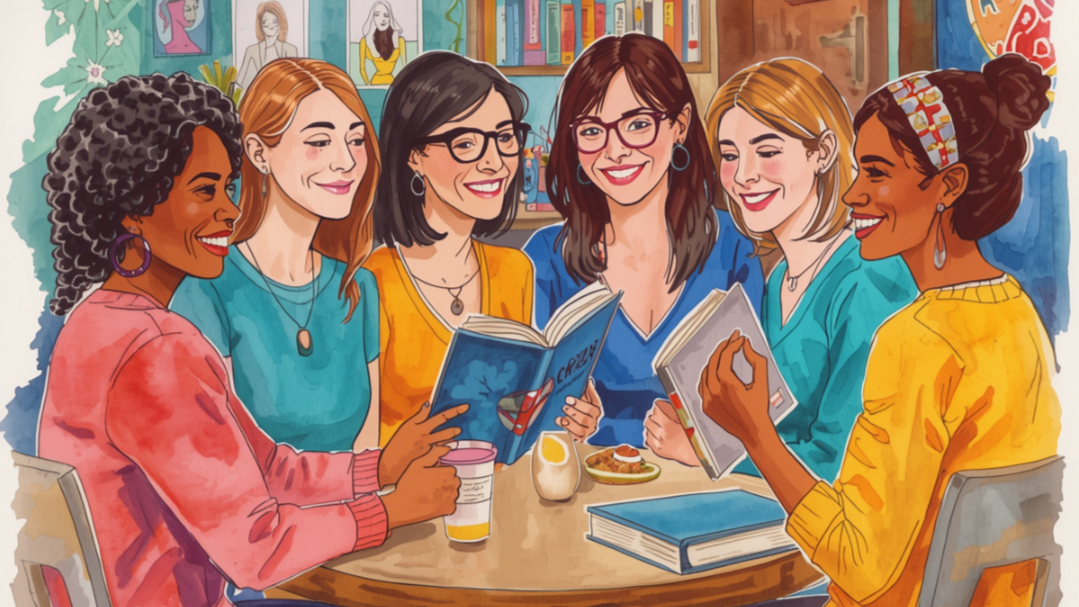
What does a Black woman's story from 1951 have to do with women's health in the Caribbean today? More than you might think. This was exactly the point of our very first FemTech Across the Caribbean Book Club on March 26th 2026.
The virtual book club is one of the ways we bring together women of the Caribbean and the Caribbean diaspora, from the islands to Canada, the UK, the United States, and beyond, to have honest, informed conversations about our health. We read. We reflect. We share. And in doing so, we build the kind of community that reminds us we are not alone in our experiences.
For our inaugural session, we chose The Immortal Life of Henrietta Lacks by Rebecca Skloot and it did not disappoint.
About the Book
Henrietta Lacks was a Black woman living in Baltimore who was diagnosed with cervical cancer in 1951 and treated at Johns Hopkins Hospital. Without her knowledge or consent, a sample of her cancer cells was taken and given to a researcher — and those cells, now known as HeLa cells, became one of the most important tools in modern medicine. They have contributed to the development of the polio vaccine, cancer research, and countless other scientific breakthroughs. Meanwhile, Henrietta died at 31, and her family remained unaware of her contribution to science for decades — and received nothing from it.
It is a story about race, consent, exploitation, resilience, and what it truly means to be seen.
What We Talked About
The conversation flowed naturally from the book straight into our own lives — and what struck us most was how much Henrietta's story still echoes across our experiences today.
On being believed. One of the first things that came up was pain — specifically, the pain of not being believed. One member shared that during a miscarriage, a male doctor told her she didn't seem to be in much pain, even as she was essentially going through labour without medication. It wasn't until a Black female doctor came in and immediately escalated her care that she was finally treated. Another member described 40 years of severe menstrual pain that was repeatedly dismissed or minimised by doctors, with no real explanation ever offered. She didn't receive a full account of her options until she was 39 — and by then, she had already suffered for decades. These experiences resonated deeply with the group because they mirrored what Henrietta herself went through: a woman in pain, not fully heard.
On health equity across the Caribbean and diaspora. Our group spanned several countries, and one of the most striking parts of the discussion was how differently race plays into healthcare depending on where you are. For those of us who have navigated the healthcare systems of the UK, Canada, or the United States, race often showed up as a direct barrier — in how seriously our symptoms were taken, who was in the room, and what care we received. For those of us currently living and practising in the Caribbean, the divide tends to show up differently — more along class and economic lines than race — but the gaps in care are still real. Women in their 60s who have never had a pap smear. Patients who only find out about the HPV vaccine when they are already sitting in an oncology office being treated for cervical cancer.
On research and what gets funded. The group got fired up talking about just how underfunded women's health research remains. Endometriosis — a condition that affects roughly 1 in 10 women — takes an average of 10 years to be diagnosed, in part because the research simply hasn't been prioritised. One member, a researcher herself, pointed out that a paper had just been published on the impact of endometriosis on male partners — while there is still so little money going toward better treatments for the women who have it. This connects directly to Henrietta's story: her cells have generated billions of dollars in scientific and medical value, and her own family couldn't afford health insurance.
On education and prevention. Several members of our group work in oncology, and they painted a sobering picture: much of what they see is preventable, but primary prevention is deeply lacking across the region. Health information is often inaccessible, written in medical language that most people can't parse, or simply not reaching communities early enough. One member shared that she received a vaccine in school as a teenager with no explanation of what it was for. Another noted that women need health information delivered in language they actually understand — not pamphlets full of clinical terminology. The group talked about starting this education at the school level, building policies that take girls' health seriously from the beginning.
On who gets to tell the story. We also spent time discussing Rebecca Skloot — a white woman who wrote Henrietta's story and achieved significant success from it. The group wrestled with this thoughtfully and honestly. Some felt initial resistance; others pointed out that Black authors with equally powerful stories rarely reach the same platforms. The prevailing feeling was nuanced: ideally, Henrietta's story would have been told by someone from her own community, but at least it was told — and told with care, using the family's own words. As one member put it, "if the story gets told and it's told accurately, we have to let the other part of that go."
On self-advocacy. The session closed with an important message that felt woven through the entire conversation: know your body, and advocate for it. One member shared that her sister-in-law kept telling her doctor something was wrong — and was dismissed as "too young" for anything serious — until she was eventually diagnosed with late-stage breast cancer. She later passed away. Another member said she now keeps a running list of questions for every appointment, more informed and more assertive than she ever was before. This book, and this conversation, gave people language and motivation to do the same.
A Note on Our First Event
This was our very first gathering as FemTech Across the Caribbean, and we are so grateful to everyone who showed up — from the islands, from the diaspora, from across so many time zones — and gave so generously of their time, their stories, and their expertise. This is exactly the kind of conversation we exist to have.
Our book club will run quarterly. Our next session will be in June — date to be confirmed — and we'd love to see you there. If you have a book you think would spark a great discussion, send us your suggestions.
Follow us on Instagram, LinkedIn, and Facebook to stay connected and so you don't miss the next one.
Because when women tell the truth about their health — to each other, and to the world — things begin to change.
